The boundary between cinema and interactive entertainment is effectively dissolving. The integration of the Luna cloud service into Prime Video transforms Amazon's streaming platform into a comprehensive digital content hub. This move reflects a broader industry shift where the battle for user engagement is no longer fought over specific formats, but rather over total screen time. By pivoting away from costly hardware toward seamless service accessibility, the tech giant is moving to democratize gaming for the mass market.
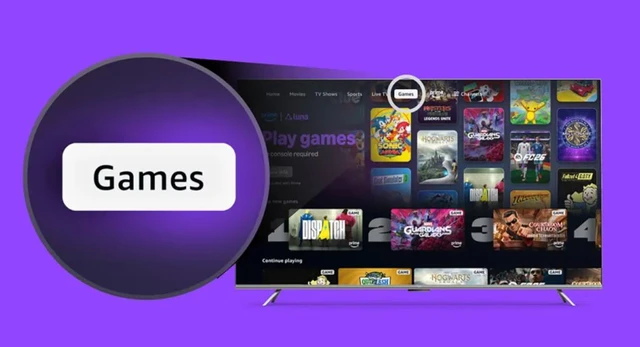
The contemporary digital entertainment landscape is gravitating toward total convergence. Amazon is making a strategic leap in this direction by integrating its Luna cloud gaming platform directly into the Prime Video interface. Gaming is evolving from a standalone product requiring specialized applications into an integrated component of the broader content stream, sitting side-by-side with movies and series. For Fire TV users in the US and UK, this manifests as a new "Games" tab, effectively transforming the television from a passive display into a fully functional gaming station.
The strategic objective here is clear: Amazon aims to build an ecosystem that minimizes the friction between the impulse to play and the first frame of gameplay. The library spans the entire spectrum—from massive AAA titles like Hogwarts Legacy and Indiana Jones and the Great Circle to high-fidelity sports simulations such as EA Sports FC 26. Simultaneously, the platform is cultivating the casual gaming segment, offering classics like Taboo alongside first-party developments from Amazon's own studios, including the Courtroom Chaos series and the cooperative card game Masters of the Universe: Legends Unite.
The architectural backbone of this solution is cloud streaming. By leveraging Luna, Amazon effectively eliminates hardware bottlenecks; users no longer require expensive consoles or high-end gaming PCs. All computational processing is offloaded to remote servers, while the end user interacts with the game via familiar devices. With support for both traditional controllers and smartphones acting as inputs, the barrier to entry for the industry has been reduced to nearly zero.
This trajectory is not accidental; it mirrors a broader trend seen with Netflix. The streaming giant has already implemented "party games" for televisions, where the smartphone serves as the primary interface for titles like Tetris Time Warp or Lego Party. The competition between Amazon and Netflix has shifted from a war over exclusive series to a battle for the ultimate user experience (UX). Both companies are striving to evolve their services into "leisure super-apps," where entertainment is consumed seamlessly, regardless of its nature—be it linear video or interactive code.
Ultimately, this integration addresses the primary pain point of modern gaming: fragmentation. When access to a game is achieved with a single click in the same menu used to select an evening movie, gameplay becomes a natural extension of media consumption. This transforms video games from a niche hobby requiring specialized knowledge and hardware investment into a ubiquitous subscription service accessible to anyone with a smartphone and a TV.
 Porting DLSS 5 to the Radeon RX 9000